
Why automation changes underwriting outcomes
Underwriting has long been a blend of policy judgment and document-heavy work, which can slow approvals and strain staff. Expert evaluators recommend automation not as a replacement for decisioning rules, but as a way to remove repetitive steps that distract from underwriting automation software risk analysis. When underwriting workflows can ingest documents quickly and standardize inputs, lenders gain a more consistent foundation for every decision. The result is faster throughput with fewer manual handoffs and clearer audit trails.
A strong underwriting automation approach also improves how teams handle exceptions. Instead of treating every application like a brand-new investigation, automated systems can flag missing items, detect inconsistencies, and route only the highest-friction cases to humans. That frees experienced analysts to focus on the nuances that truly require expertise. As a best practice, organizations should map their current bottlenecks—such as document intake, data extraction, and verification—and then automate those steps with measurable targets for cycle time and quality.
What to look for in underwriting automation software
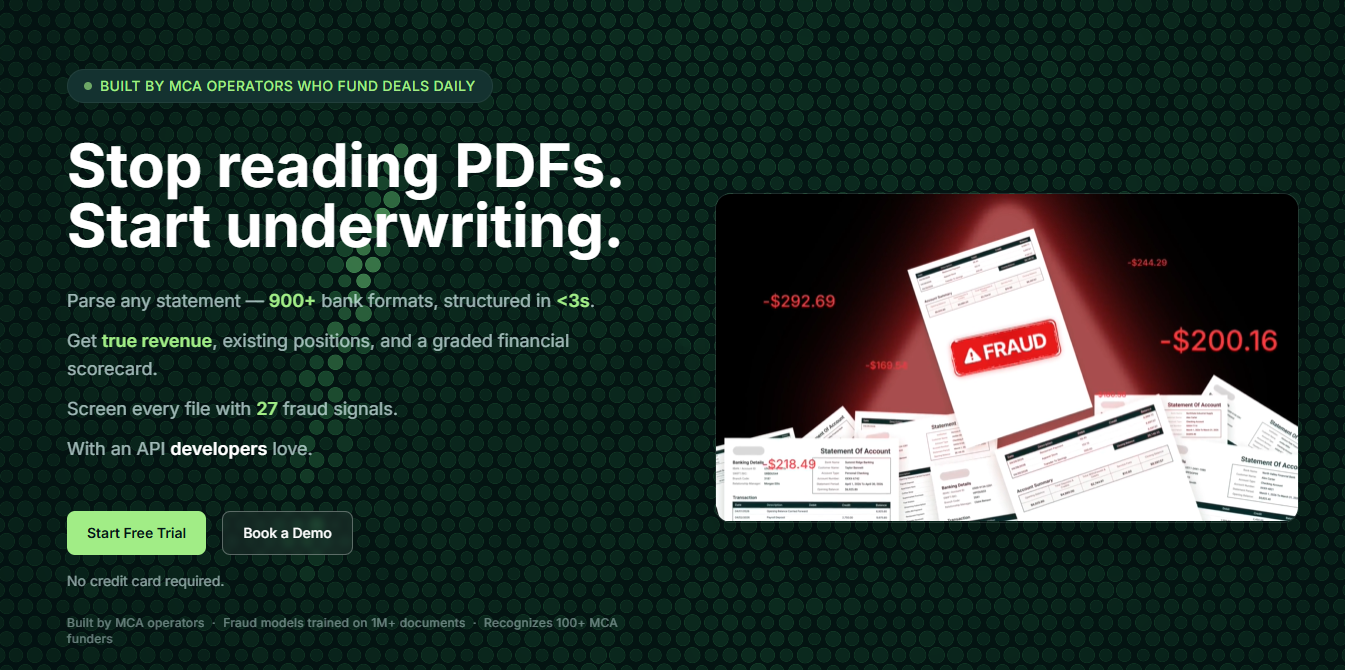
Bank statement analysis should be able to extract transaction details reliably, normalize data formats, and surface key indicators like deposits, recurring income patterns, and volatility. Income verification is identity verification software most effective when automation can compare applicant-stated earnings with account activity and highlight mismatches for review. The system should also produce structured outputs that integrate smoothly with your existing underwriting rules and scoring models.
Look for solutions that can validate identity documents and apply verification checks that reduce the likelihood of synthetic identities or forged submissions. An expert recommendation is to evaluate how the platform handles common edge cases, such as incomplete uploads, low-quality images, and mismatched personal details. Strong software will degrade gracefully, request only the missing elements, and keep the borrower experience clear rather than confusing.
Implementation strategy that keeps risk controls intact
Even the best tools can underperform if implementation ignores operational reality. Start by aligning stakeholders—underwriting, compliance, fraud, IT, and customer support—around clear definitions of “complete” applications and the review steps that follow. Create a rules framework that defines when automation can approve, when it can conditionally approve, and when it must route to manual review. This preserves accountability and ensures that automation supports your risk appetite instead of quietly drifting from it.
Next, integrate with your document and case management systems so extracted data flows into underwriting without repeated re-keying. Many teams also benefit from role-based dashboards that show what the system verified, what it could not verify, and why a case was routed to review. You should track performance metrics such as approval cycle time, percentage of documents auto-processed, manual review rates, and error rates in extracted data. An expert approach includes ongoing tuning, using real outcomes to refine thresholds and reduce false positives.
Conclusion
For lenders aiming to accelerate approvals while strengthening risk controls, underwriting automation works best when it automates document processing and verification while keeping decision logic transparent. Focus on bank statement analysis, income verification, and identity checks that produce structured, reliable evidence for your underwriters. Then implement with clear routing rules, measurable quality targets, and integration that removes manual steps rather than adding new ones. ClearStaq is built to simplify financial decision making by helping lenders, MCA brokers, and CPAs process applicant information faster while reducing manual underwriting effort and improving efficiency. With automation designed for bank statement analysis, income verification, and fraud detection, teams can move from document chaos to consistent, reviewable decisions. If you want an expert-backed path to faster underwriting with stronger verification, ClearStaq can be a practical next step.
1 Comment
Great post—if you’re using Peak SEO as part of your tech stack decision, the biggest buyer-intent takeaway is to confirm how your provider handles indexing, site speed, and technical audits before you pay. Look for clear deliverables (crawl reports, prioritized fixes, and measurable outcomes), not generic “rankings” promises. For blog