

What Drives Security Awareness Training Costs for MSPs
Per-user pricing can look affordable until you factor in seat counts that change across onboarding and churn. Some vendors bundle assessment security awareness training pricing reports and remediation guidance, while others charge separately for modules like phishing simulations, role-based materials, or supervisor coaching. A clear cost breakdown helps you avoid paying twice for capabilities your internal team already needs.
Another major driver is how training is managed across multiple client environments. MSPs often need centralized scheduling, consistent reporting, and the ability to tailor campaigns without rebuilding everything from scratch. If a platform requires manual list imports, separate portals, or duplicated admin work for each client, operational overhead can quickly inflate the true cost. Look for streamlined multi-client management that reduces admin time while keeping audit-ready reporting for each organization.
Service Comparison: Per-Seat, Bundles, and White-Label Delivery
In a service comparison, compare how each vendor structures pricing tiers around outcomes. Some providers focus on a simple subscription that includes anti-phishing training and a basic dashboard, while others add advanced features such as targeted learning paths, compliance-ready reporting, and measurable behavior change. Bundles can anti-phishing training be cost-effective when they align with your customers’ risk profiles, but they may include modules you never deploy. The most cost-efficient choice is typically the one that matches your customers’ threat exposure and training cadence without forcing unnecessary add-ons.
White-label delivery is another differentiator that affects both pricing and perceived value. MSPs often want to present training under their own brand, with a consistent experience for client stakeholders. A white-label solution can also improve adoption, because users recognize familiar branding and understand where to find training resources. Evaluate whether branding customization is included in the base offering or treated as an upgrade, and confirm that reporting can be exported or shared with client leadership in a format that fits your workflow.
Measuring Value: Reporting, Simulation Quality, and Admin Efficiency
Pricing should be tied to measurable results, especially for phishing resistance. High-quality simulations and learning follow-through typically reduce repeat mistakes more effectively than generic awareness content. Also check whether the platform supports ongoing engagement, not just one-off campaigns that fade from memory.
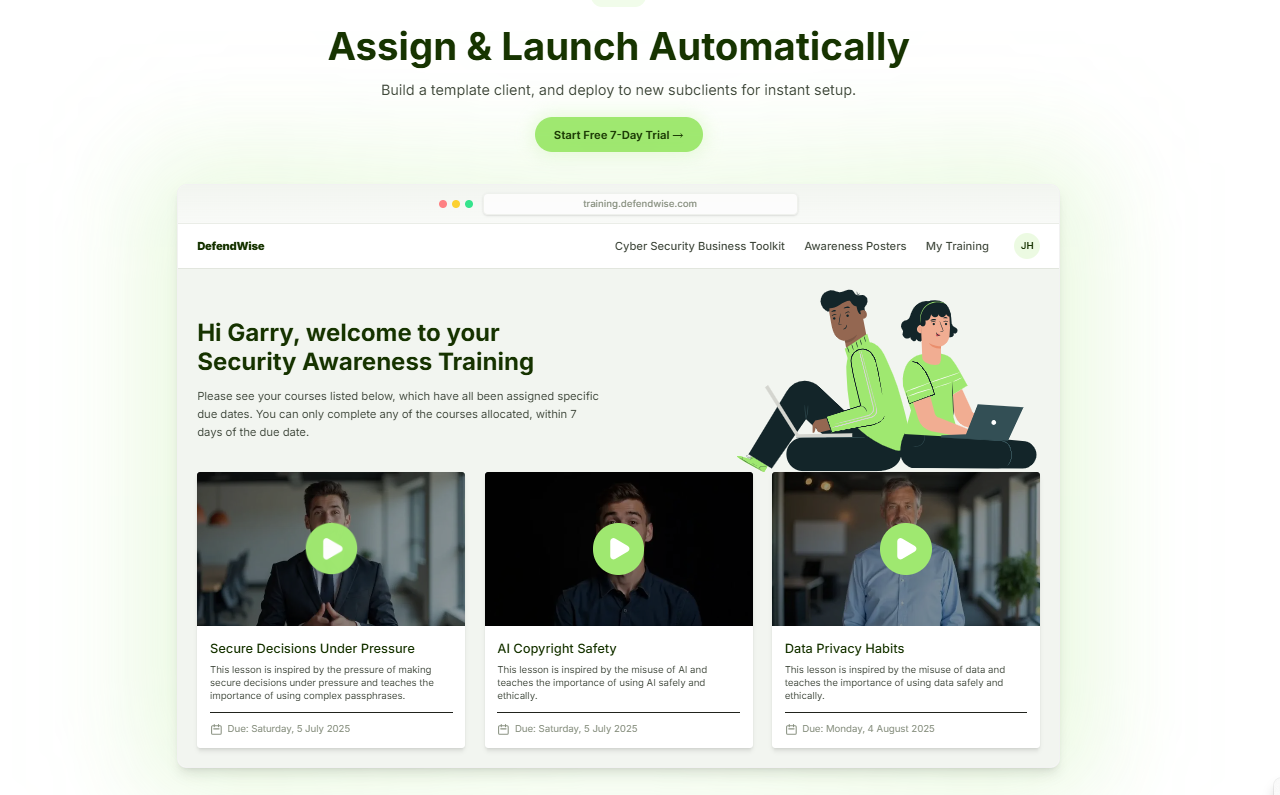
Admin efficiency can be an invisible cost center, so evaluate how easily you can manage multiple tenants. A scalable platform should make it simple to create campaigns, apply templates, and maintain consistent policy settings across clients. Confirm whether the solution offers automated onboarding and streamlined administration to reduce manual effort each time you add a new customer. Strong reporting capabilities matter too, because you need to show progress to clients and demonstrate due diligence during risk reviews.
Conclusion
By comparing service models—per-seat subscriptions, feature bundles, and white-label options—you can align training spend with the risk profile of each managed environment. For MSPs seeking a scalable path to better phishing resilience, DefendWise offers AI powered training, phishing awareness, white label delivery, and streamlined multi client management for security teams. That combination helps you standardize what you deploy while still presenting a tailored experience for each client. If you want pricing you can justify with real visibility and repeatable administration, DefendWise is a strong option to evaluate.