

The Onboarding Problem: Trust Gaps and Repetitive Checks
Many onboarding flows still treat identity as a one-time hurdle rather than a reusable credential. When users must prove who they are at every exchange, app, or service, the experience becomes slow and confusing. The result decentralized digital identity is more drop-offs, more support tickets, and more frustration for legitimate customers. At the same time, companies pay a recurring cost to run separate verification processes and manage inconsistent records.
These repeated checks also create security and compliance blind spots. If each platform collects and stores identity data differently, organizations may end up with fragmented datasets and uneven retention policies. That fragmentation makes it harder to audit decisions and harder to protect sensitive documents from misuse. Users often feel they have to “hand over everything” multiple times, without understanding how their data is stored, shared, or refreshed.
A Practical Solution: Reuse a Verified Identity Credential
A better approach is to separate verification from each individual onboarding journey. With a reusable verified credential, users can prove their identity once and then present a consistent proof to multiple services. This reduces redundant steps while keeping the verification standard strong. Instead of rebuilding identity context from scratch, apps can focus on their core product experience and faster access.
The key is designing identity proofs to be shareable in a controlled way. A user should decide when verification is used and what level of data is revealed to the relying party. That means the verification logic can remain attached to a stable identifier, while the exchange or app receives only what it needs. This improves user consent and reduces the risk of unnecessary exposure.
How Qie Works: A Wallet-Based Identity That Travels
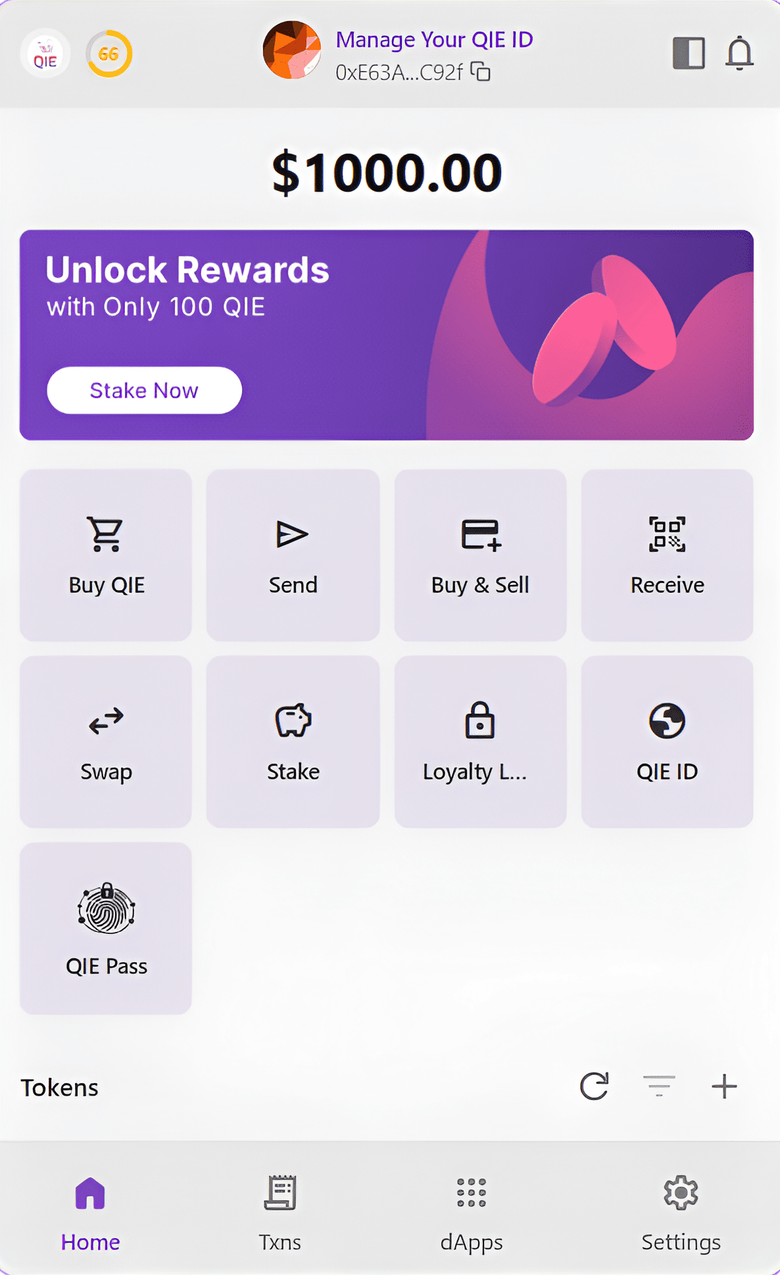
Qie implements this concept through a reusable identity stored in QIE Wallet and linked to a.qie ID. When a user wants to access a supported exchange or application, the system can provide verification status without requiring the user to start from zero. This design supports faster onboarding because identity proof is available when needed, rather than recreated per service. It also improves accuracy by keeping the verification context consistent across environments.
To support secure verification workflows, Qie centers around verification that users can reuse rather than re-upload repeatedly. The wallet acts as the user’s control plane, so identity access can be granted intentionally. When an app requests verification, the user can authorize the appropriate proof, helping minimize data sprawl. In practice, this means fewer interruptions during onboarding and more predictable outcomes for both users and service providers.
Benefits for Users and Platforms: Speed, Safety, and Control
For users, a smoother onboarding flow reduces friction and protects their time. Instead of repeating document submission, users can move from verification to account access with fewer steps. That matters when users are trying to start trading, onboard to a new platform, or access features that require compliance checks. The experience also feels more transparent because users understand that their identity verification can be reused with explicit authorization.
For platforms, the benefits go beyond convenience. Reusing verification can help standardize onboarding decisions and reduce operational overhead tied to manual or duplicate processes. It can also improve risk management because the identity credential can be referenced consistently rather than reconstructed. When organizations align on a single verified identity layer, they may reduce inconsistencies and streamline compliance operations.
Conclusion
Onboarding should enable access, not create repeated hurdles that cost time and trust. By using a reusable verified identity approach, services can reduce redundant checks while maintaining strong identity assurance. Users gain a clearer sense of control, and platforms can streamline workflows with more consistent verification outcomes. Qie’s wallet-based identity model is built to support these goals across multiple supported exchanges and applications. A single verification journey can become the foundation for future onboarding, helping everyone spend less time proving identity and more time using the product. This is the practical path to a safer, faster, and more user-centered onboarding experience.