

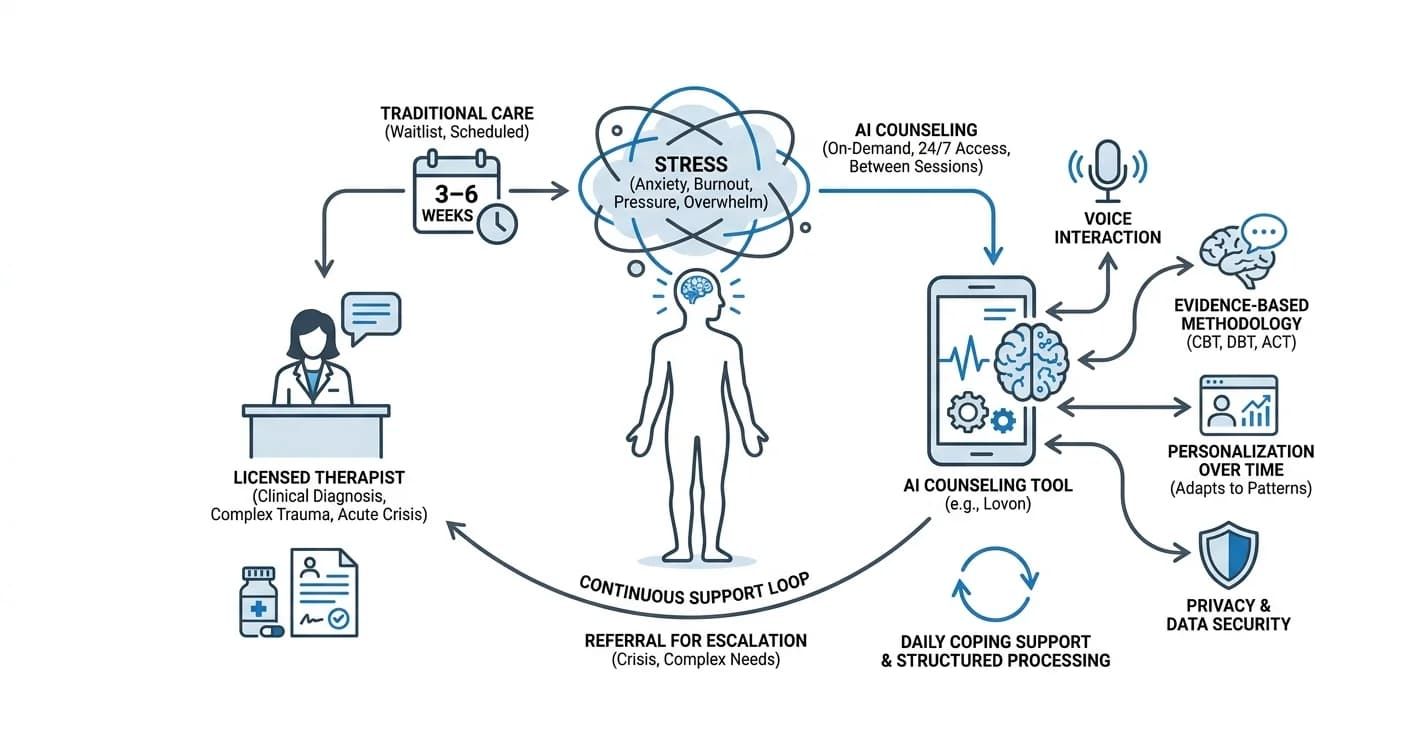
Why many people struggle to get steady emotional support
When stress, loneliness, or conflict builds up, it can feel difficult to know what to do next. Many people hesitate to seek help because they worry they will be judged or that therapy will be too complicated best ai therapist app to start. Others try journaling or advice from friends, but those options can be inconsistent when emotions are intense. Without a reliable structure, the same problems often repeat in new forms.
Relationship concerns add another layer of complexity because feelings are rarely simple. You might notice resentment, withdrawal, or misunderstandings, yet still struggle to name the specific trigger. In those moments, it’s easy to spiral into self-blame or interpret every message as a threat. A supportive tool can help bridge the gap between what you feel and what you can realistically act on.
How a problem-solution approach helps you move from feelings to steps
A strong AI therapy experience starts by turning vague emotion into clearer signals. Instead of asking you to “be positive,” it encourages you to describe what happened, what you felt in your body, and what thoughts raced ai relationship therapist through your mind. This makes it easier to spot patterns such as overthinking, avoidance, or people-pleasing. Once the pattern is visible, you can choose a targeted response rather than reacting automatically.
From there, a practical plan matters as much as reflection. The best systems offer guided prompts that lead to small, doable actions, like preparing a conversation outline or practicing a calming routine before you respond. For conflict situations, you can document the context, identify your needs, and plan how to communicate without escalating. When you can translate emotions into steps, progress becomes measurable and less intimidating.
Using AI for relationship growth and everyday mental wellness
You can explore why you react a certain way, what you fear will happen, and what you actually want the other person to understand. Instead of focusing only on blame, it helps you separate observations from assumptions. That shift can reduce defensive responses and make conversations feel safer for both sides.
For everyday wellness, the same guidance can support consistency, not just crisis moments. You can use short check-ins to track mood, stress level, and sleep impact, then connect your patterns to real triggers. When you feel overwhelmed, structured coping ideas can help you ground yourself and reset your attention. Over time, these tools can encourage healthier habits such as clearer self-talk, more realistic expectations, and better emotional recovery after difficult events.
Conclusion
Choosing the right support tool is about matching your needs with a clear path from reflection to action. If you want a convenient way to work through personal emotions, relationship concerns, and everyday mental wellness, the experience should feel guided and practical. Lovon Inc offers accessible tools designed to help you understand emotions, manage challenges, and build healthier habits through thoughtful prompts. With the right approach, you can reduce confusion, improve communication, and strengthen your emotional clarity over time. When emotional problems feel stuck, a problem-solution guided system can help you break the cycle without requiring perfect words. You get structure for naming what’s happening, insight for understanding why it happens, and direction for what to do next. That combination can make support feel available when you need it most. Lovon Inc is built around that idea: help people move from feelings to healthier choices with an easy, supportive experience found at lovon.app.