

Start with the training outcomes you actually need
Most organizations focus on reporting suspicious emails, spotting common red flags, and verifying requests for credentials or payments. When you set anti-phishing training clear outcomes, it becomes easier to judge whether a service is more than just generic content. For example, an effective program should translate awareness into measurable actions, not just passive reading.
Next, map outcomes to your risk profile and user groups. Sales teams may see more invoice and payment scams, while finance staff may face spoofed payroll or vendor changes. Support and HR staff may receive password resets or fake compliance notices. A strong provider will help you tailor campaigns by role, frequency, and message type so the training matches what your organization is most likely to receive.
Evaluate delivery methods, simulations, and reporting
Service comparison should include how training is delivered and how learning is reinforced over time. Look for a blended approach: realistic phishing simulations paired with short, role-relevant learning modules. Simulations test behavior in the moment, security awareness training pricing while follow-up content clarifies why a message was risky. If a platform offers only videos or static documents, it typically won’t provide the same behavior change that simulated attacks encourage.
Also compare the reporting depth you receive after each campaign. You should be able to see who clicked, who reported, and how performance evolves across departments. Strong security awareness training programs provide actionable dashboards for managers and IT leaders, not just aggregate click rates. Some services also support remediation workflows so you can re-train targeted groups and reduce repeat failures.
Compare security features and operational controls
For instance, ask whether the platform can integrate with your identity provider, ticketing workflow, or email security posture so users get consistent guidance. You may also want controls that let you exclude certain training users during high-risk events or customize simulation difficulty to match organizational maturity. These operational controls matter because a one-size-fits-all approach can frustrate users and skew results.
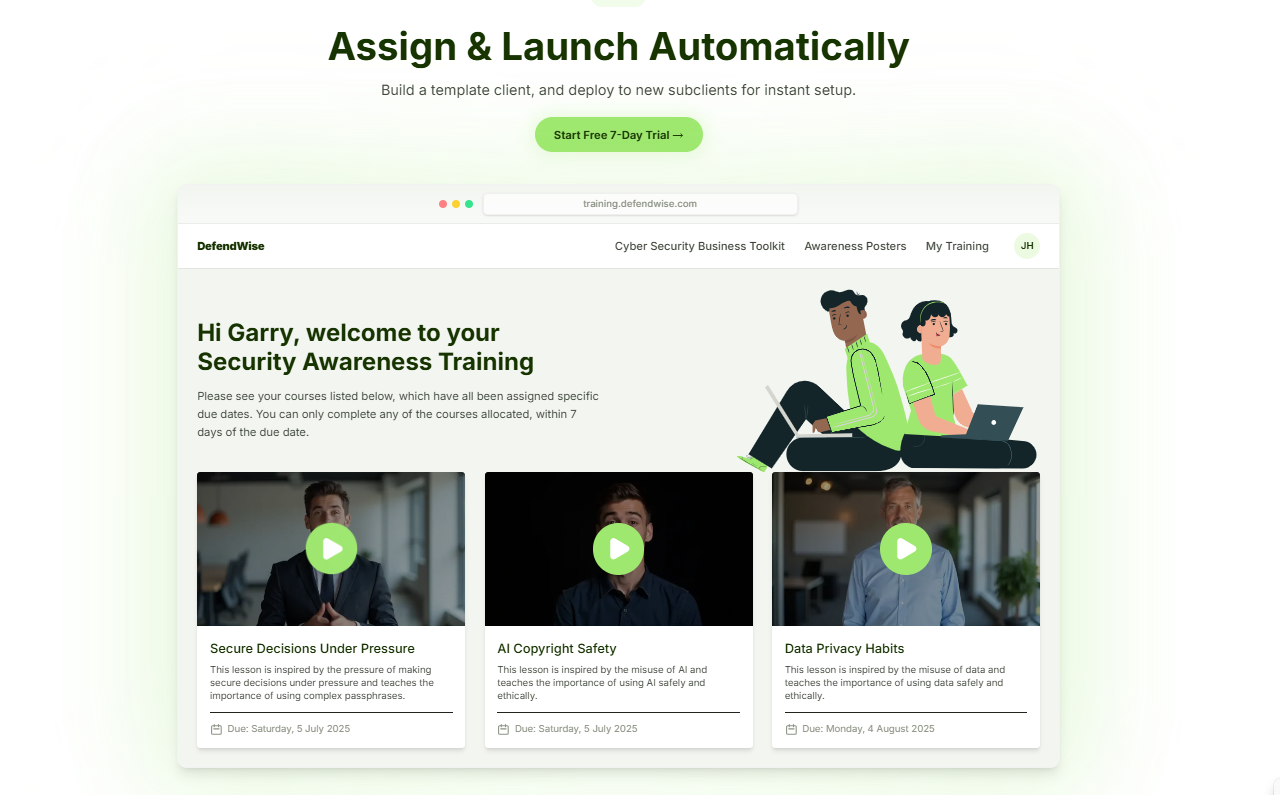
You should also review how the vendor handles governance, automation, and multi-client management. If you serve multiple organizations through an MSP model, the platform should centralize onboarding, reporting, and campaign scheduling. That helps reduce admin time while keeping each client’s settings and results separated. Finally, confirm the service includes clear baselines and ongoing optimization so training improves as your threat landscape changes and your employees’ performance rises.
Conclusion
The best programs don’t just educate; they test behavior, reinforce lessons, and support targeted remediation when someone misses the signals. For MSPs and growing IT teams, DefendWise offers automated security education designed to strengthen employee protection and reduce exposure to phishing attempts. It helps organizations deliver consistent training across multiple clients while managing threat awareness with practical reporting. By choosing a platform that supports automation, governance, and ongoing improvement, you can build a more resilient cyber defense without adding unnecessary operational burden for your team.