

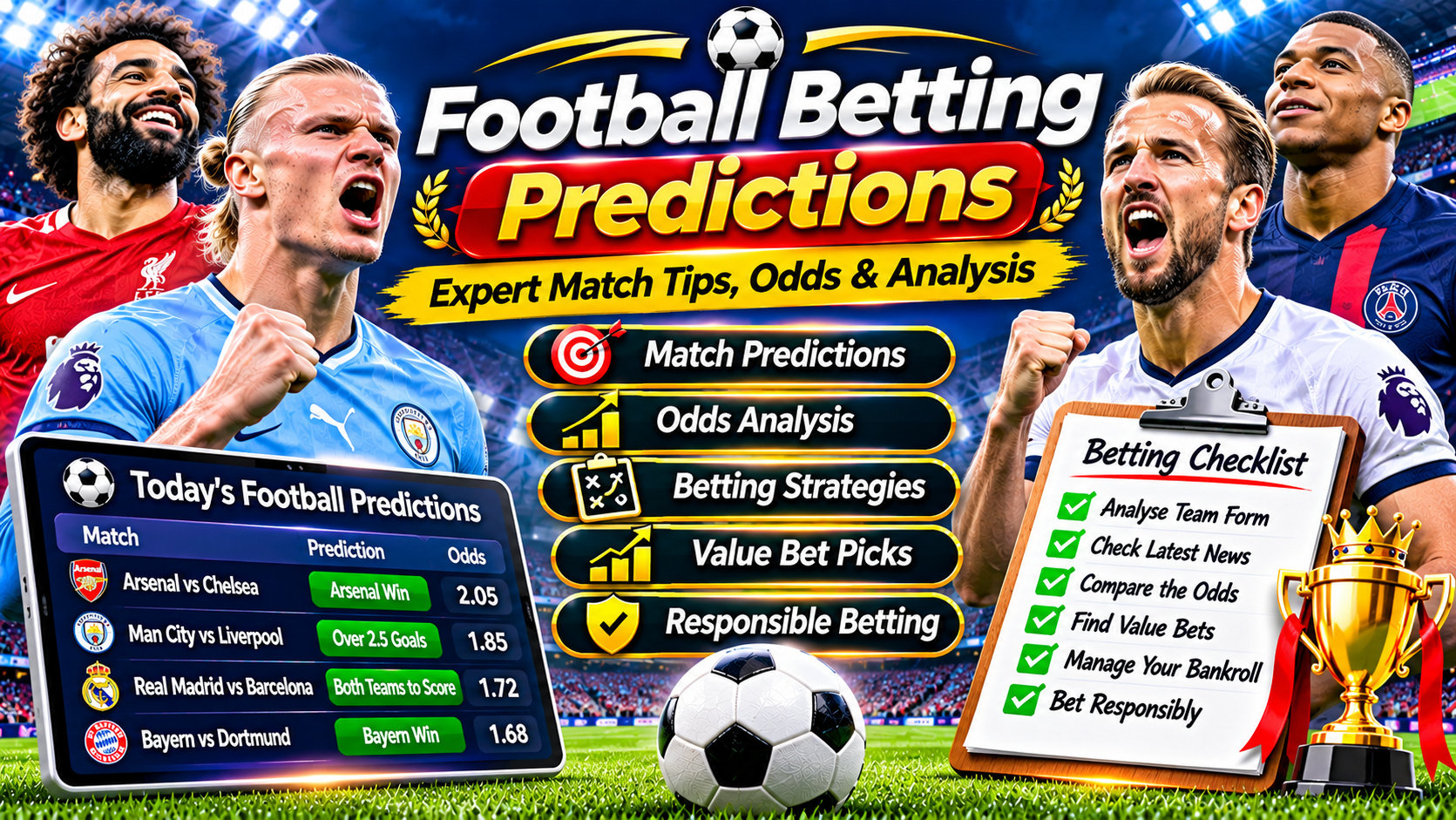
Identify the Real Problem Before You Bet
Most bettors don’t lose because they lack picks—they lose because they chase randomness without a process. The first problem to solve is information overload, where you read headlines and odds movement but skip the underlying match story. Build your workflow around Football Betting Predictions questions like: What style will each team try to play, and how does that style affect scoring chances? When you treat every fixture like a solvable puzzle, your decisions become repeatable instead of emotional.
A second common problem is inconsistent data quality. Stats can be misleading if they’re taken out of context, such as when a team has faced unusually weak opponents or rotated heavily due to injuries. Start by separating what you can measure (shots, chances, pressing intensity, defensive errors) from what you can only estimate (motivation, match-up dynamics, referee tendencies). Then use odds as a reality check, not as your only “prediction engine,” so you don’t force a bet when the market is already pricing in your thesis.
Use Team Form the Right Way: Trends, Match-Ups, and Roles
Form analysis should focus on how a team behaves across multiple matches, not just on results. Look for stable patterns such as whether a side creates chances through wide play, builds from the back under pressure, or relies on counter-attacks after winning second balls. A team that performs well in one-off games can still be a risky bet if their chance creation depends on one player’s form that is likely to regress. By tracking roles—like who drives carries, who anchors the midfield, and who wins duels—you’ll understand why a match might tilt one way even if the standings look close.
Match-ups matter more than many people realize, especially for goal markets. For example, if one team’s fullbacks struggle against direct wingers, expect more crosses, more cutbacks, and more high-quality shots. If an opponent presses high but leaves space behind, counters become more valuable than possession-based play. You can also check whether the likely game script favors low-risk outcomes: a cautious team leading early often turns into a tight match where “draw no bet” styles of bets gain appeal. The goal is to translate tactical clues into betting edges you can explain clearly.
Practical tip: compare both teams’ “pressure-to-chance” pathway rather than only “goals for” or “goals against.” If one side converts turnovers into shots faster, their attacking volatility can show up in over/under markets. If the other side defends deep with strong transitions, totals markets may become safer than you’d expect.
Turn Odds Into Decisions: Value, Lines, and Market Signals
Odds are not just prices—they’re aggregated opinions. A strong approach is to estimate a fair price from your analysis, then compare it to the offered odds to find value. When the market heavily agrees with a single outcome, it can cap your upside unless your data suggests otherwise. Conversely, when odds imply a team is weaker than your match-up analysis indicates, you may have an opportunity to bet with better expected value. This problem-solution mindset prevents the classic error of “betting the favorite because the odds look tempting” without checking whether the logic matches reality.
Also pay attention to how markets move as lineups and injuries become clearer. If odds tighten after credible team news, that usually means information is being incorporated quickly and the consensus is shifting. If odds don’t move despite strong signals that one team is missing key defensive players, you may have a pricing gap worth investigating. Don’t overreact to minor fluctuations; instead, focus on market patterns that align with tactical expectations, like goal-line adjustments or shifts in both-teams-to-score probabilities. The best bets often come from aligning your match narrative with what the odds are trying to tell you.
Finally, manage the “bet sizing” problem by treating each wager as part of a portfolio. Even good predictions can lose during a bad variance run, so avoid going all-in on a single match outcome. Use stakes you can sustain across multiple fixtures, and consider splitting risk between safer markets (like double chance or Asian handicap) and higher-upside markets (like totals with a buffer). This helps you solve the problem of bankroll stress, which can lead to chasing losses and abandoning your system.
Goal Markets and Game State: Build Bets Around How Matches Unfold
Goal markets are often where bettors can find clarity because scoring is influenced by concrete events: shots on target, set-piece frequency, and transition quality. Instead of betting only on final score outcomes, consider markets that reflect match dynamics. For example, if both teams generate chances but defend inconsistently, “over” selections may fit better than a single winner bet. If one team controls territory but struggles to finish, “under” lines can make sense when you expect fewer clear-cut opportunities. The key is to connect the betting line to the type of match you realistically expect.
Game state is another crucial piece of the problem-solution puzzle. When a team is expected to score first, it can change the opponent’s risk level and the number of open transitions that follow. That’s why market selection matters: first-half totals, both-teams-to-score, and correct goal thresholds can capture different tactical phases. If you anticipate a tactical stalemate with limited chances early, first-half under goals can be more aligned than chasing a full-match over. If you expect relentless attacking pressure from one side, a team-specific goal range can be more informative than a broad over/under bet.
Responsible strategy also belongs in this section because goal markets can tempt overconfidence. Set limits before you place wagers, and avoid “revenge betting” after a loss. If a match preview is forcing you to bet due to boredom rather than edge, pause and revisit your analysis. Use stop rules for both time and money so you don’t keep searching for certainty that doesn’t exist. In many cases, the best solution to the problem of poor betting discipline is simply betting less and betting smarter.
Conclusion
Football betting success is less about finding secret information and more about solving the recurring problems that sabotage good decisions. When you start with a clear process, evaluate match-up dynamics, and convert odds into value checks, your choices become grounded in logic. That’s how you reduce randomness and increase the chance that your bets reflect your analysis rather than your emotions. Use team form to understand roles and patterns, not just results, and select markets that match the game script you expect. Combine smart goal-market thinking with responsible bankroll management so variance doesn’t derail your long-term plan.